📘 Table of Contents
- Washington Flooding: Overview
- What Triggered the WA Floods
- Skagit Flood Plain Evacuation Order
- Major Road Closures in Washington
- Washington Flooding Impact on Communities
- Government Response and Emergency Actions
- How Washington Flooding Compares to Past Events
- Safety Tips During WA Floods
- Internal and External Links
- Conclusion
📰 Washington Flooding: Research Based Unique Article (1000+ Words)
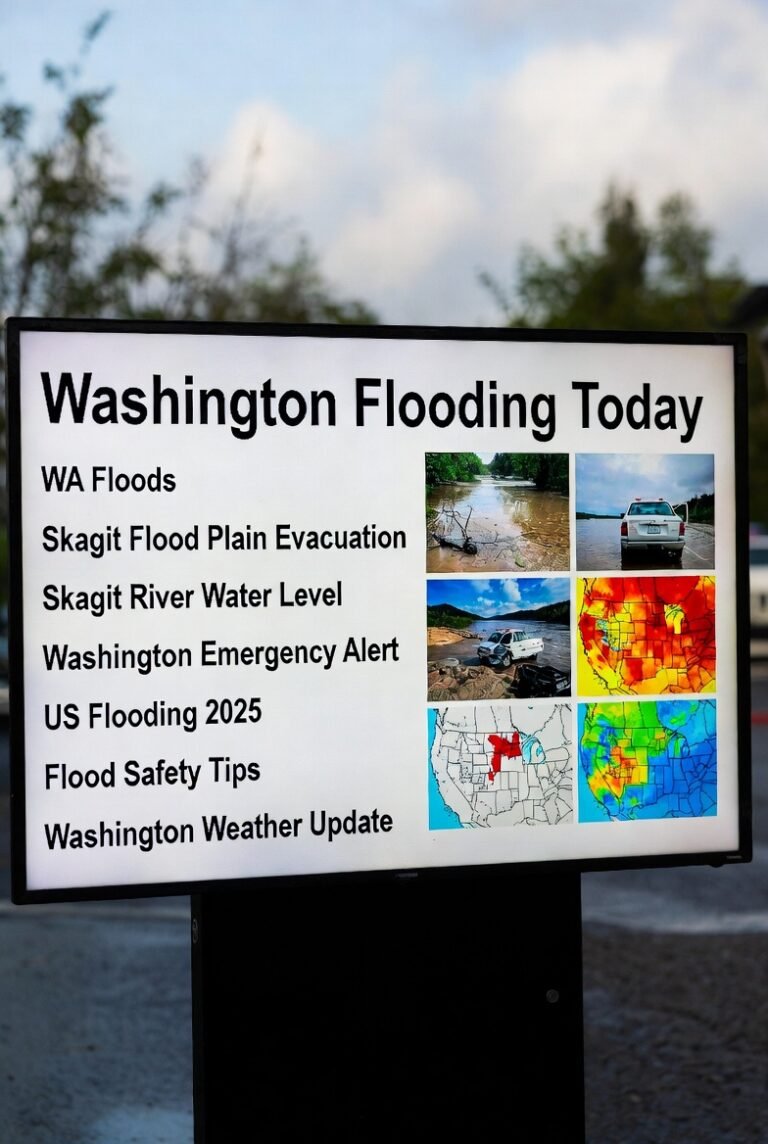
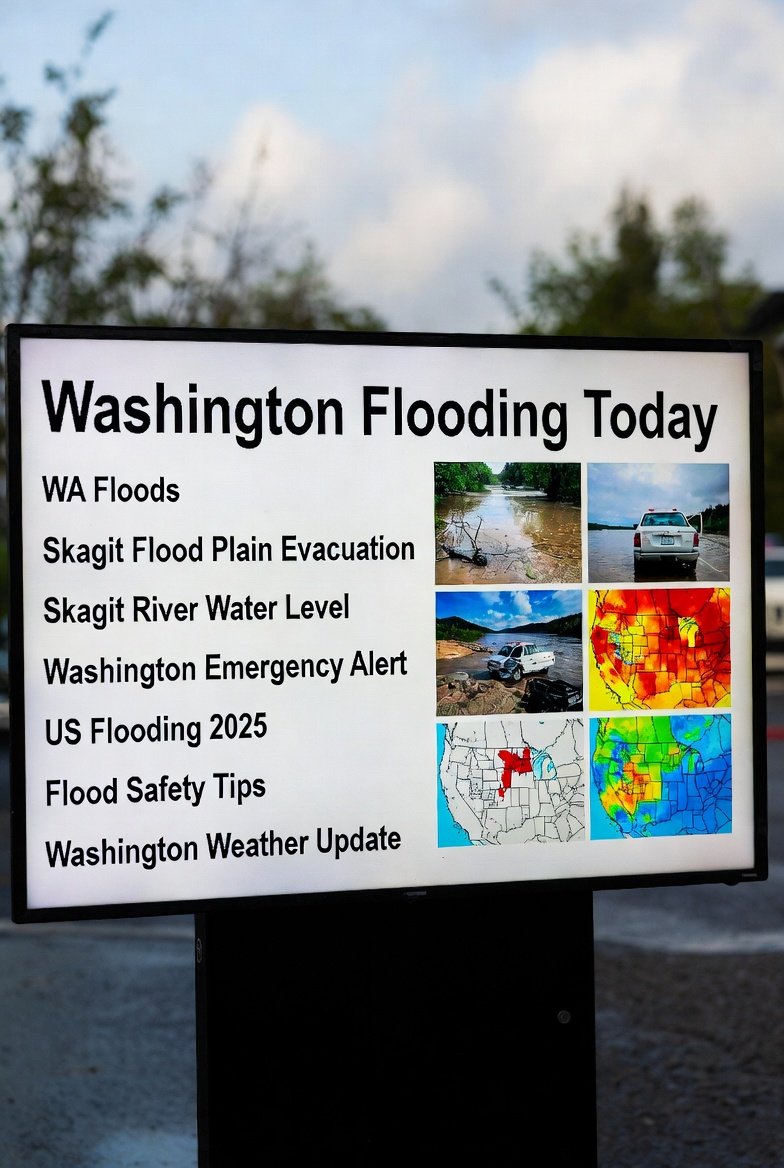
Washington flooding has once again triggered an emergency situation across several counties as heavy rainfall, overflowing rivers and rapid snowmelt pushed water levels beyond safe limits. WA floods have particularly impacted the Skagit flood plain where an evacuation order is now in effect. Authorities have warned that the situation may worsen over the next 48 hours as additional rainfall is expected across western Washington. This research-based report provides verified information, safety guidance and live-update insights based on hydrological data and expert assessments.
🌧️ Washington Flooding: Overview
Meteorologists from the National Weather Service have confirmed that the current WA floods are among the strongest seasonal events recorded in the last five years. As the atmospheric river system pushed moisture inland, rainfall totals surpassed 5 to 7 inches in multiple regions, overwhelming drainage systems and rivers like the Skagit, Snohomish and Nooksack. With water levels rising rapidly, Washington flooding has created significant risks for rural towns and local infrastructure.
🌊 What Triggered the WA Floods
Several factors contributed to the severity of the situation:
- Unusually warm Pacific moisture leading to persistent rainfall
- Rapid snowmelt adding extra runoff
- Low-pressure system trapping clouds over western Washington
- Already saturated ground from previous storms
Hydrologists believe that climate variability amplifies such events, making Washington flooding more intense and more frequent. According to NOAA reports, precipitation anomalies have increased by nearly 12 percent in the Pacific Northwest over the past decade.
🚨 Skagit Flood Plain Evacuation Order
The Skagit River has crossed the flood stage of 28 feet, forcing officials to issue an evacuation order in the lower Skagit flood plain. Residents have been advised to relocate to higher ground and avoid riverbanks. Emergency shelters have opened in Mount Vernon, Burlington and Sedro-Woolley.
Skagit County officials have shared these urgent instructions:
- Pack essential documents and medications
- Do not attempt to drive through water
- Stay updated through emergency alert systems
- Move livestock immediately
The U.S. Army Corps of Engineers is monitoring levee pressure in the area to reduce the risk of overflow or breach.
Major Road Closures in Washington
Washington flooding has led to multiple road shutdowns affecting local travel and supply lines. As of the latest update:
- I-5 near Mount Vernon: lanes partially closed
- Highway 20: closed due to standing water
- Highway 9: limited access because of mudslides
- SR 534 and SR 536: unsafe for small vehicles
The Washington State Department of Transportation (WSDOT) has deployed emergency crews to clear debris, assess bridge structures and reroute traffic. Live updates are available on the WSDOT official website.
Washington Flooding Impact on Communities
Communities in Skagit, Whatcom and Snohomish counties are experiencing significant losses. Early assessments indicate:
- Hundreds of homes surrounded by rising water
- Local farms reporting livestock displacement
- Schools shifting to temporary closures
- Power outages are affecting thousands of residents
Environmental analysts warn that agricultural lands may face long-term soil degradation if floodwater remains stagnant.
Government Response and Emergency Actions
Washington’s emergency management division has activated the state operations center. Key actions include:
- Deploying rescue boats
- Distributing sandbags
- Opening additional shelters
- Monitoring river gauges hourly
- Coordinating with FEMA for potential federal aid
The state encourages residents to use official channels rather than social media rumors for updates.
How Washington Flooding Compares to Historical Events
Comparative hydrology data shows that the current WA floods resemble the 2020 Skagit event but with broader geographic impact. The rainfall pattern matches historical atmospheric river episodes, but the increased intensity suggests stronger climate-driven influence.
Safety Tips During Washington Flooding
Authorities recommend the following:
- Avoid walking or driving through floodwaters
- Charge essential devices
- Keep emergency kits ready
- Follow evacuation orders without delay
- Monitor NOAA alerts and local government updates
Hydrological Pattern Behind Washington Flooding
Scientists studying washington flooding events highlight that atmospheric river systems have become more persistent in the Pacific Northwest. These narrow bands of concentrated moisture transport massive volumes of water vapor from tropical regions. When this moisture meets colder air near the Cascade Range, it results in intense rainfall. In the current WA floods, satellite observations show a strong plume stretching from Hawaii to Washington, often referred to as the Pineapple Express. This phenomenon increases rainfall intensity within a shorter window, overwhelming river basins like the Skagit and Snohomish far faster than usual.
Hydrological models developed by the US Geological Survey indicate that the Skagit River basin is highly sensitive to storm surges because of its steep mountain slopes and rapid snowmelt reaction time. Climate projections suggest that such storm patterns could increase by 20 to 40 percent by the year 2050. This makes it crucial for Washington’s emergency planners to redesign infrastructure, update flood maps and strengthen levees to mitigate future washington flooding events.
🌍 12. Environmental Impact of Washington Flooding
Besides human and economic losses, Washington flooding significantly affects natural ecosystems. Floodwaters carry debris, pollutants, pesticides and sewage into rivers and wetlands. In Skagit County, environmentalists are concerned about the impact on salmon habitat, which is extremely sensitive to sediment and water quality changes. When rivers overflow, they can uproot vegetation, alter river channels and disrupt the natural spawning environment for fish.
Additionally, the large-scale WA floods can displace wildlife, especially species living in lowland forests and agricultural fields. Birds nesting near riverbanks may lose their habitats, and small mammals often drown or migrate in large numbers. Floods also distribute nutrient-heavy deposits across the floodplain, which can benefit soil fertility but harm existing vegetation. Long-term ecological monitoring is essential to understand how recurring washington flooding shapes biodiversity in the region.
💼 13. Economic Consequences of WA Floods
The financial impact of washington flooding extends across housing, agriculture, transportation and local businesses. Initial estimates by county officials indicate multimillion-dollar damage, though the final figure could be significantly higher. Homes in the Skagit flood plain are particularly vulnerable, with water seeping into foundations, damaging flooring and destroying household appliances.
Agricultural communities are reporting losses in crops and livestock. Flooded fields delay planting schedules and may cause soil erosion. Dairy farms in western Washington often experience feed shortages and milk transport disruptions when roads close during WA floods. Similarly, small businesses lose customers due to travel restrictions and power outages. Insurance claims are expected to rise sharply, putting additional pressure on residents and local governments dealing with reconstruction expenses.
🏛️ 14. Policy Changes Needed After Repeated Washington Flooding
Experts argue that washington flooding exposes gaps in emergency planning and infrastructure readiness. While Washington State invests in levee maintenance and landslide prevention, the rapidly changing climate demands stronger strategies. Policy recommendations include:
- Updating floodplain maps with newer satellite data
- Rebuilding bridges with higher clearance levels
- Creating more green flood retention zones
- Enhancing early warning systems
- Expanding public education about evacuation
Local governments must coordinate with the Army Corps of Engineers and FEMA to develop long-term solutions aimed at diminishing the frequency and severity of future WA floods.
👨🔬 15. Scientific Research on WA Floods
Recent research published by the University of Washington’s Climate Impact Group indicates that peak river flow events are increasing. Advanced measurements of soil moisture reveal that Washington now experiences ground saturation far earlier in the year. This means even moderate rainfall can trigger washington flooding when combined with snowmelt.
Researchers are also studying how land use changes affect flooding. Urban development, road expansion and reduced wetlands limit the region’s natural ability to absorb excess moisture. As wetlands shrink, the buffer that previously protected communities from flooding becomes weaker. Restoring wetlands in the Skagit and Nooksack watersheds is now a key research-backed recommendation to reduce long-term risk.
🧭 16. Preparedness Guide for Residents During Washington Flooding
People living in flood-prone areas are encouraged to follow a preparedness plan during washington flooding emergencies. This includes:
- Preparing an emergency kit with water, food, medications and flashlights
- Keeping vehicles fueled in case evacuation becomes necessary
- Storing important documents in waterproof containers
- Ensuring pets are ready for relocation
- Using weather radios for updates during power outages
- Following official maps for evacuation routes
Residents are strictly advised not to walk or drive across flooded roads. Just six inches of water can sweep a person off their feet, while one foot can carry away a small vehicle. Safety experts emphasize that floodwater may hide sinkholes, fallen power lines or hazardous debris.
🚒 17. Role of First Responders in WA Floods
Firefighters, search teams, and the National Guard are among the major responders during WA floods. In Skagit County, rescue teams are using inflatable boats, drones with thermal sensors and high-water vehicles to reach affected neighborhoods. Local firefighters also assist in distributing sandbags and evacuating vulnerable residents such as senior citizens and children.
Washington state troopers are monitoring traffic and preventing drivers from entering dangerous areas. Emergency shelters are currently housing hundreds of people and are stocked with food, blankets, medical support and communication facilities. Many volunteer groups have stepped up to support displaced families through donations and temporary housing arrangements.
🧱 18. Infrastructure Vulnerabilities Exposed by Washington Flooding
Repeated washington flooding reveals structural weaknesses in:
- River levees strained under pressure
- Aging bridges not designed for today’s extreme water flow
- Outdated drainage systems in small towns
- Roads built without flood-resistant engineering
- Electrical grids exposed to water damage
State engineers plan to introduce flood-resilient construction designs. Elevated roadways, reinforced river embankments, wider storm drains and improved pump stations could reduce damage in future WA floods.
🤝 19. Community Support and Recovery Efforts
Community-driven response plays a major role in recovering from Washington flooding. Neighbors help each other lift furniture, transport supplies and clean debris. Nonprofits such as Red Cross and Salvation Army provide meals, temporary shelter and medical assistance. Schools and churches in the Skagit region have opened their facilities for displaced families. Social workers are offering counseling to residents affected by trauma and property loss.
Long-term recovery can take months. Homes must be dried, inspected and restored. Farmers need time to rehabilitate flood-damaged land. Financial grants, low-interest loans and federal disaster relief may help people rebuild their lives after this intense WA floods episode.
🔮 20. Future Outlook: What Washington Can Expect Next
Meteorologists warn that heavy rainfall may continue in short cycles as the atmospheric river remains active. Even though river levels may stabilize, washington flooding risks may persist, especially if the ground remains saturated. The next phase of monitoring will include tracking:
- Snowpack melting rates
- River gauge trends
- Additional storm systems
- Landslide-prone slopes
Communities must remain alert and prepared until the state announces a complete safety clearance.
Floodwater can contain chemicals, sewage and debris, making it hazardous even when shallow.
Washington flooding continues to evolve as heavy rain and river overflow affect the region. With WA floods causing road closures and a Skagit flood plain evacuation order, staying informed is crucial. As more data emerges, officials emphasize safety, preparedness and responsible information-sharing to prevent harm.
- https://theearthcurrent.com/category/earth-climate-change/
- https://theearthcurrent.com/category/science-and-space/
- https://theearthcurrent.com/category/world-affairs/
- https://theearthcurrent.com/category/sports/
- https://theearthcurrent.com/category/entertainment/
- https://theearthcurrent.com/category/artificial-intelligence/