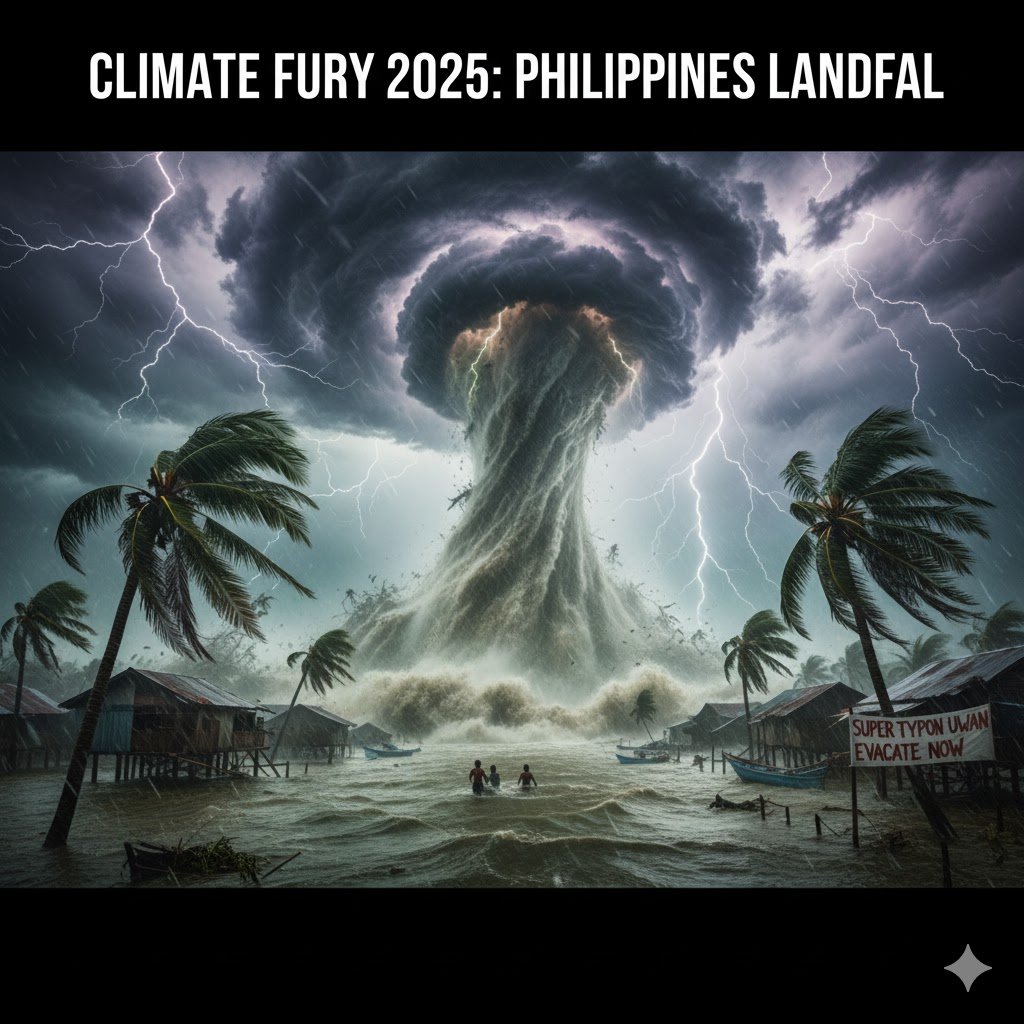
Imagine the Pacific’s fury uncoiling like a dragon over the Philippines, where skies darken not with night but with the wrath of Super Typhoon Uwan—internationally Fung-wong—barreling toward landfall on November 9, 2025. Just days after Typhoon Kalmaegi (local name Tino) claimed 204 lives in the archipelago and five more in Vietnam, leaving Cebu submerged and fishing villages in ruins, this Category 5 behemoth packs sustained winds of 185 kph (115 mph) with gusts ripping to 230 kph (143 mph). PAGASA, the Philippine weather bureau, hoisted Signal No. 5—the highest alert—over eight provinces including Catanduanes and Aurora, signaling devastating damage potential from storm surges up to 5 meters and rainfall exceeding 500 mm in 24 hours. As of 11 AM local time, the eye skimmed Catanduanes’ coast, unleashing biblical downpours and waves crashing like thunder in Dingalan, Aurora, while power flickered out across Eastern Visayas. This isn’t isolated fury; it’s a climate-amplified double punch, with research from the World Meteorological Organization linking warmer oceans to 20% fiercer typhoons since 1970. Buckle in for the top facts, a survival blueprint, and why 2025’s storm season demands global action—your roadmap to resilience starts here.
The Beast Approaches: Uwan’s Path and Power in Stunning Detail
Born in the western Pacific on November 4 as a tropical depression, Fung-wong exploded into super typhoon status by November 8, its low-pressure core fueled by record sea surface temperatures averaging 30°C—2°C above norms, per NOAA satellite data. Forecast models from the Joint Typhoon Warning Center pinpoint landfall between Baler, Aurora, and Casiguran tonight, slicing through central Luzon before curving northeast toward Taiwan by Monday. Himawari-8 satellite imagery at noon revealed a massive, ragged eye wall blanketing the entire Philippine archipelago in true-color gloom, with spiral bands dumping 100 mm/hour in Bicol Region.
Real-time X dispatches paint a visceral prelude: Videos from Virac, Catanduanes, capture palm trees bowing horizontal in 150 kph gales, rain lashing like machine-gun fire, and coastal surges swallowing roads—echoes of Haiyan’s 2013 horror but with modern evacuations blunting the edge. Unlike Kalmaegi’s meandering floods that stranded 500,000 in Cebu last week, Uwan’s compact fury targets mountainous terrain, amplifying landslides in Quezon and Isabela where Signal No. 4 prevails. Aviation chaos reigns: Over 300 flights scrubbed by the Civil Aviation Authority, stranding OFWs and tourists amid Manila’s Signal No. 3 winds. For a broader view on Pacific storm trends, explore our Top 10 Climate Change Impacts on Asia 2025 Guide.
Evacuation Epicenter: Nearly 1 Million on the Move Amid Rising Waters
In a nation hardened by 20 annual typhoons—the alphabet’s 26 letters barely cover them—authorities mobilized like clockwork, evacuating 950,000 by midday Sunday, per the National Disaster Risk Reduction and Management Council. Coastal hotspots like Camarines Sur saw Philippine Coast Guard boats ferrying families—bags clutched, children wide-eyed—to sturdier high grounds, as rivers swelled 3 meters in hours. Metro Manila, under moderate gale warnings, shuttered schools and offices, while Bicol’s 200,000 preemptive relocations dodged Kalmaegi’s replay.
Heart-wrenching X threads from locals underscore the human toll: One Catanduanes resident shared footage of uprooted billboards cartwheeling like tumbleweeds, captioning, “Pray for our islands—Uwan’s roar is deafening.” Health officials, via the Department of Health, mandated three-day medicine kits—non-expired paracetamol, antibiotics, and rehydration salts—in waterproof go-bags, anticipating diarrhea spikes from contaminated floods. ReliefWeb’s snapshot tallies 1.2 million affected already, with $50 million in aid prepositioned, but experts warn post-landfall bottlenecks could mirror Tino’s $1.2 billion damage tab. This scale? A testament to lessons from Yolanda, where early warnings saved 30% more lives per UNDRR studies.
Climate’s Cruel Amplifier: Why 2025’s Back-to-Back Super Storms Signal Doom
The Philippines, a typhoon corridor buffeted by the Pacific’s warm conveyor, faces an escalating nightmare. A 2025 IPCC update attributes 15-20% intensity boosts to anthropogenic warming, with El Niño’s fade into La Niña ironically priming wetter swings. Kalmaegi’s Cebu deluge—200 mm rain in days—barely receded when Uwan’s outer bands reignited overflows, submerging 50 barangays per Inquirer tallies. X analysts like @BackpirchCrew note this November duo evokes 2024’s quadruple strike, eroding resilience in a country where 60% live in harm’s way.
Long-term? Sea level rise of 10 cm since 2010 exacerbates surges, per ADB models, projecting $100 billion annual losses by 2050 without mangrove restorations and dike upgrades. Global solidarity echoes in calls from AP News: Wealthy emitters must fund $10 billion in Philippine adaptation, as Uwan’s toll—projected at 50-100 fatalities—mounts. Unpack more in our Latest 2025 Disaster Recovery Strategies Update.
Your 2025 Typhoon Survival Blueprint: 8 Must-Know Steps to Weather the Storm
Don’t wait for the howl—act now with this PAGASA-vetted guide, slashing risks by 40% per Red Cross drills.
- Secure Your Kit Essentials: Stock 72-hour supplies—canned goods, water (4 liters/person/day), flashlight, batteries, and a battery radio for signal updates. Add masks for post-flood air.
- Evacuate Smart: Head to higher ground if under Signal No. 3+; avoid riversides. Register with local barangay for headcounts.
- Fortify Home: Board windows with plywood, trim loose branches, and unplug appliances to dodge surges.
- Monitor Relentlessly: Tune to DZBB or PAGASA apps for hourly bulletins; X hashtags like #UwanPH deliver eyewitness alerts.
- Family Drills: Assign roles—who grabs the go-bag, who checks elders? Practice quarterly.
- Health First: Boil water, use hand sanitizer; watch for leptospirosis in wading zones.
- Post-Storm Check: Inspect for gas leaks, structural cracks; report to NDRRMC hotlines.
- Community Link-Up: Join neighborhood watches; share resources via apps like FB’s Safety Check.
Tailor this with our How to Build a Typhoon Emergency Kit Guide for personalized prep.
As Uwan carves its scar across Luzon, remember: The Philippines’ spirit—bayanihan in action—turns tragedy to triumph, but climate inertia threatens more. With Vietnam bracing for remnants and Taiwan on yellow alert, this storm whispers a global wake-up. Share your safety tips below, tag a friend in the path, and subscribe for real-time 2025 weather exclusives. Stay vigilant; the calm after demands it.
Breaking 2025 alert: Super Typhoon Uwan slams Philippines with 230 kph gusts – nearly 1M evacuated as floods and winds rage! Uncover top facts on post-Kalmaegi chaos, how-to survival tips, and climate change’s role in super storms. Your best guide to stay safe – read now before it’s too late!
Super Typhoon Uwan 2025, Philippines typhoon landfall, Fung-wong evacuation updates
Typhoon Kalmaegi aftermath, climate change super typhoons, typhoon survival guide 2025, PAGASA storm signals, Philippines flood risks
Hashtags
#SuperTyphoonUwan #PhilippinesStorm2025 #TyphoonEvacuationFacts #ClimateCrisisPH #StaySafeUwan #FungWongLandfall #DisasterPrepGuide
- Dive into Our Top 10 Climate Change Impacts on Asia 2025 Guide
- How to Build a Typhoon Emergency Kit: Best Tips and Facts
- Latest 2025 Disaster Recovery Strategies Update for Flood-Prone Areas