As the climate crisis intensifies, carbon capture and storage (CCS) — and its cousin carbon capture, utilization, and storage (CCUS) — are often hailed as key tools to claw back emissions from industry, power, and even directly from the air. Yet, despite years of research, hype, and policy pledges, progress is lagging. A recent article by SCI highlights three major bottlenecks still holding back CCS deployment. Others echo similar constraints. This article unpacks those barriers and explores whether 2025 might be the turning point for carbon removal technologies.
The Three Core Constraints
The SCI article frames the challenge in three main dimensions: scale and ambition, cost and economics, and policy & regulatory uncertainty. soci.org
1. Scale and Ambition: Too Few Projects, Too Little Capacity
While hundreds of CCS and CCUS projects are proposed globally, their scale is far smaller than what climate pathways require. According to SCI, the projects currently in planning cover just 6% of what is needed by 2040 to meet global emissions targets. soci.org
Indeed, while the number of planned projects has surged, actual operational capacity is still modest. A survey of the sector shows that although over 600 projects are in the pipeline and investment has tripled since 2022, the cumulative capture sits at about 50 million tonnes of CO₂ per year — a tiny fraction of the gigaton-scale reductions needed. Brian D. Colwell+1
The gap between ambition and execution is stark: CCS must scale orders of magnitude faster, and many proposed projects never move beyond the “front-end engineering design” (FEED) or feasibility studies.
Cost and Economic Viability: Too Expensive, Too Risky
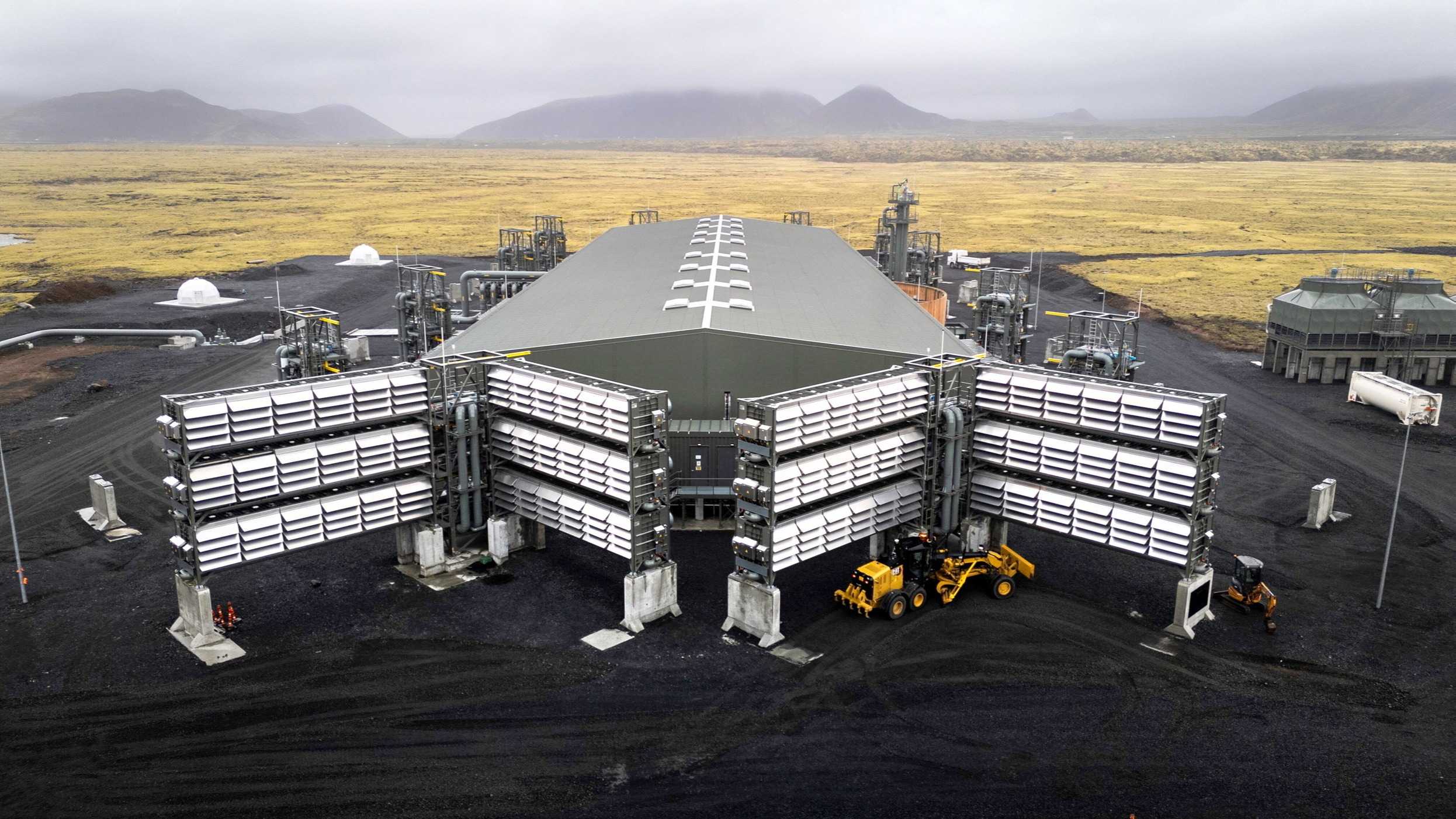
Capturing, transporting, compressing, and permanently storing CO₂ is expensive and energy-intensive. Many capture technologies, especially direct air capture (DAC), are not yet cost-competitive with carbon prices or alternative mitigation strategies.
A recent Financial Times investigation showed that Climeworks, a leading DAC company, has had to revise its cost projections upward — now targeting $250–$350 per tonne by 2030, rather than the $100 per tonne it had hoped earlier. Financial Times
Some large industrial CCS projects also struggle: the Gorgon facility in Australia, for example, underperformed relative to its targets, capturing only 1.6 million tonnes annually instead of the 4 million tonnes pledged. The Australian
These cost overhangs are a major deterrent to private investment and make many CCS projects heavily subsidy-dependent.
Policy, Regulatory and Market Uncertainty
Even where technical potential exists, many projects stall due to weak or ambiguous policy frameworks. Unclear regulations concerning liability, long-term storage risks, carbon pricing, and permitting delays are among the biggest disincentives.
For instance, global investors and developers frequently cite the lack of long-term revenue certainty and policy consistency as a reason not to commit capital. BNP Paribas CIB+3ING Think+3World Economic Forum+3
Moreover, the mismatch in timing or ambition between jurisdictions (e.g. capture in one country, storage in another) adds complexity and legal risk. Cross-border CCS frameworks are still nascent. arXiv+1
Glimmers of Hope and Recent Milestones
Despite the barriers, some positive developments suggest CCS might be nearing a tipping point — though the road ahead remains steep.
- Northern Lights Project (Norway): The world’s first open-source CO₂ transport and storage infrastructure recently started operations, injecting CO₂ into seabed formations. Reuters+2World Economic Forum+2
- Norwegian Longship / Longship Initiative: Norway has committed large subsidies (over $3.4 billion over ten years) to promote industrial CCS deployment in the cement and steel sectors. Financial Times+1
- Growing Investment Forecasts: Models suggest that cumulative investment into CCS could reach $80 billion over the next five years, driven especially by North America and Europe. World Economic Forum+1
- Technological Innovation: New strategies — for example, coupling CCUS with hydrogen production or more efficient capture systems — are being explored. A recent preprint from China examines co-production of cement and methanol to reduce abatement costs. arXiv
- Regional Cross-border Projects: The proposed Northern Lights–Poland network and other collaborations show the potential for shared infrastructure and risk mitigation across borders. arXiv
Why 2025 Could Be a Pivotal Year — Or a Missed Opportunity
Analysts increasingly view CCS as at a turning point. The World Economic Forum, citing DNV forecasts, projects that CCS capacity might grow fourfold by 2030, but emphasizes that this must be backed by strong regulatory commitment. World Economic Forum
However, several risks loom:
- Subsidy fatigue and political shifts: If governments retreat or reallocate funding, many CCS projects could stall.
- Technology underperformance: If DAC or capture systems fail to deliver consistent efficiency gains, deployment plans will recede.
- Storage constraints: A recent Nature study found that the global capacity for safe, long-term geological CO₂ storage may be an order of magnitude lower than widely assumed. AP News
Pathways Forward: What Must Change
To break the logjam, three key shifts are essential:
- Robust, predictable policy and market frameworks
Governments must provide long-term carbon pricing, clear liability rules, and supportive subsidies or guarantees to attract capital. - Cost reduction through technological improvements and scale
Modular and standardized capture systems, integration with existing industry, and R&D into lower-energy processes will drive down costs. - Strategic deployment in hard-to-abate sectors and coordination of infrastructure
Cement, steel, chemicals, and waste-to-energy plants may offer the earliest viable CCS deployment zones. Shared pipelines and storage hubs across regions can reduce duplication and risk.
Carbon capture and storage remains a compelling yet elusive component of climate strategy. The three obstacles of scale, cost, and policy uncertainty continue to slow progress — a reality unpacked in the SCI analysis. soci.org
Yet the modest successes of Northern Lights, government-backed projects like Longship, and increased investor interest hint at a potential shift. Whether CCS becomes a mainstay or a niche fallback depends largely on 2025’s policy choices and technological leaps.
Related news

Norway’s Northern Lights CCS project starts operations with first CO2 injected
Direct carbon capture falters as developers’ costs fail to budge
Study: There is less room to store carbon dioxide, driver of climate change, than previously thought