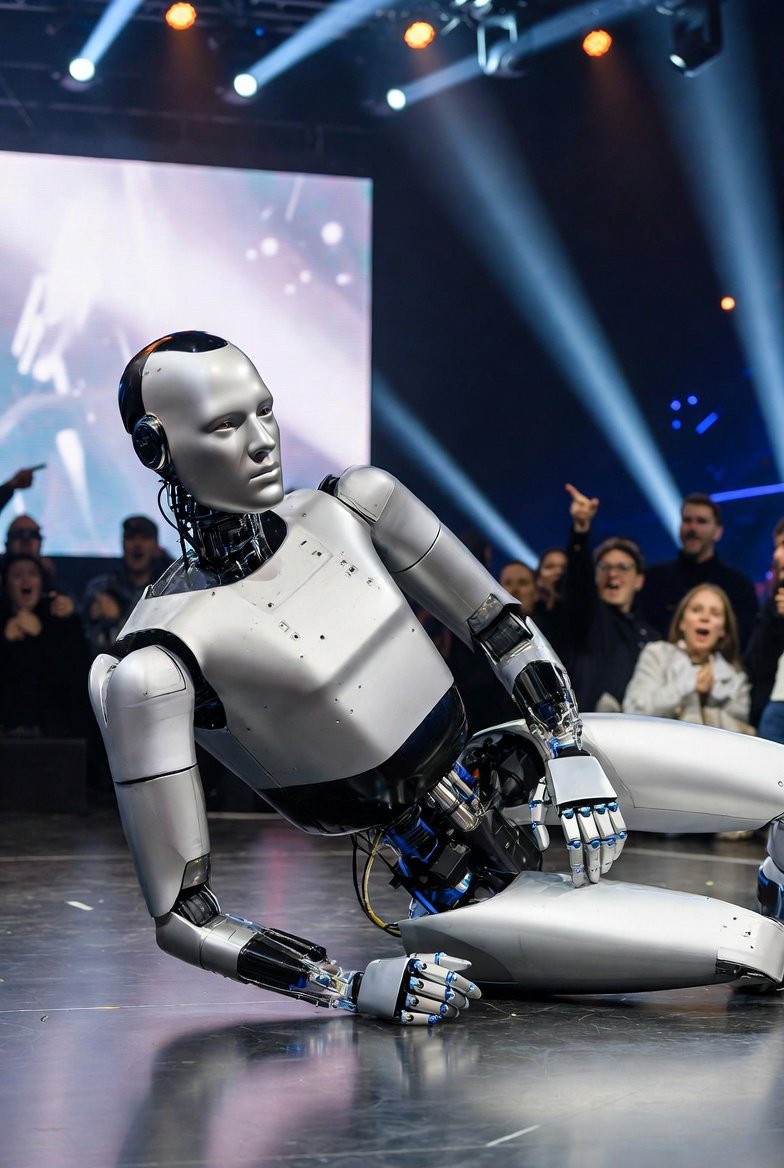
In a moment that has sent shockwaves through the global tech community and sparked endless memes online, Russia’s much-hyped first AI-powered humanoid robot AIDOL took a literal tumble during its grand debut at a technology showcase in Moscow on November 11, 2025, faceplanting spectacularly just seconds after stepping onto the stage as handlers scrambled to lift the 1.7-meter tall machine amid awkward laughter from the audience. Developed by Moscow-based Sberbank subsidiary SberDevices at an estimated cost exceeding $10 million, AIDOL was billed as a revolutionary anthropomorphic robot capable of human-like walking, object manipulation, and AI-driven conversations powered by advanced neural networks akin to those in Tesla’s Optimus or Boston Dynamics’ Atlas, yet the incident highlighted stark vulnerabilities in calibration and balance algorithms that experts say plague even cutting-edge prototypes worldwide. Video footage of the mishap, which has amassed over 5 million views on X and YouTube within 48 hours, shows the sleek silver-and-black robot staggering forward with jerky, uncoordinated steps before pitching headlong onto the polished floor, its articulated arms flailing uselessly as the Rocky theme blared ironically in the background, a detail that amplified the comedic tragedy and drew comparisons to classic slapstick fails. Organizers quickly attributed the fall to a “minor calibration error” exacerbated by the stage’s lighting and uneven surface, but critics like robotics professor Dr. Elena Petrova from Moscow State University argue it underscores deeper systemic issues in Russia’s AI sector, including sanctions-induced delays in accessing high-fidelity sensors from Western suppliers, forcing reliance on domestic alternatives that lag in precision gyroscopes and real-time processing. This isn’t an isolated embarrassment; recall Boston Dynamics’ early Atlas flips or SoftBank’s Pepper tipping over in demos, yet AIDOL’s flop arrives at a precarious time for Russian innovation amid geopolitical tensions, with state media downplaying it as a “learning moment” while social media erupts in schadenfreude, from quips about the robot “learning to walk like a babushka after too much vodka” to broader jabs at national engineering prowess. On a deeper level, the incident raises timely questions about the maturity of humanoid AI: despite billions poured into the field by giants like OpenAI and Figure AI, achieving stable bipedal locomotion remains elusive due to the “moravec’s paradox,” where simple physical tasks demand exponentially more computational power than abstract reasoning, a challenge AIDOL’s Yandex-integrated brain couldn’t overcome in its live test. Looking ahead, SberDevices vows rapid fixes via over-the-air updates to AIDOL’s GPGPU clusters, potentially deploying it in warehouses by 2026, but this viral pratfall serves as a humbling reminder that the road to seamless human-robot coexistence is paved with epic stumbles, fueling both ridicule and resolve in the race for AI supremacy.
Witness the viral disaster: Russia’s groundbreaking AIDOL AI robot crashes face-first in its hyped Moscow debut! Uncover what caused the humiliating fall, expert reactions, and why this exposes flaws in global AI robotics – don’t miss the hilarious memes and serious implications for 2025 tech!
Russian AI Robot Fall, AIDOL Humanoid Fail, Moscow Robot Debut Disaster, AI Robotics Glitch 2025, Russian Tech Humiliation, Humanoid Robot Faceplant, Viral AI Fail Video, ECI Calibration Error, Future of AI Robots, Global Robotics Mishaps
Hashtags:
#RussianAIRobotFail #AIDOLFaceplant #MoscowTechDisaster #AIGlitchGoneWrong #HumanoidRobotFail #ViralRobotVideo #AI2025Nightmare #TechFailMemes #RussiaInnovationFlop #RoboticsRealityCheck