Imagine a nation where every sixth person on Earth calls it home, where youthful energy could fuel a superpower or spark resource wars from the Himalayas to the Arabian Sea. As of October 2025, the world’s population stands at a staggering 8.2 billion, hurtling toward a UN-projected peak of 10.3 billion by the mid-2080s before a precarious plateau. But India’s narrative steals the spotlight: At 1.46 billion strong – 17.78% of global humanity – we’re on track to balloon to 1.7 billion by the 2060s, eclipsing China and reshaping demographics forever. This isn’t mere arithmetic; it’s a seismic shift laced with religious undercurrents, regional imbalances, policy triumphs and tragedies, and the tantalizing promise of a demographic dividend worth trillions. Drawing from the UN’s World Population Prospects 2024, Census of India extrapolations, Pew Research deep dives, and NFHS-5 fertility data, this exhaustive 2400-word analysis unpacks trends, busts myths, and blueprints solutions. From Hindu heartlands outpacing Muslim enclaves in convergence to Bihar’s boom versus Kerala’s bust, we reveal how manpower can ignite 8% GDP growth – or implode into chaos. If population dynamics intrigue you, this research-packed exposé is your definitive guide. Share it, debate it, and let’s turn numbers into national destiny!
UN World Population Prospects 2024: Global trends showing peak at 10.3 billion by 2084 – a ticking clock for humanity.
Global Population Dynamics: From Explosive Boom to Tense Plateau – UN’s 2024 Revelations and Beyond (Word count: 520)
The United Nations’ World Population Prospects 2024 (WPP 2024) delivers a sobering yet nuanced portrait of humanity’s trajectory. From a modest 2.5 billion in 1950, we’ve surged to 8.2 billion today, but the frenzy is waning. Annual growth rates, which peaked at 2.1% in the late 1960s, have nosedived to 0.9% by 2024, propelled by fertility rates plummeting from 5 children per woman to a global average of 2.3. The UN’s medium-variant scenario forecasts a zenith of 10.3 billion around 2084, followed by a slight decline to 10.2 billion by 2100 – a “peak and plateau” paradigm shift driven by urbanization, education, and access to contraception.
Yet, variances abound. High-fertility projections warn of 12.4 billion if sub-Saharan Africa sustains 4+ births per woman; low variants cap at 7 billion with aggressive policies. Regionally, Africa’s explosive growth – from 1.5 billion today to 3.3 billion by 2100 – contrasts Asia’s stabilization and Europe’s senescence (median age 43, fertility 1.5). The Americas hover at replacement levels, while Oceania benefits from migration inflows. In 48 countries (10% of world pop), peaks hit between 2025-2054; by 2100, 63 nations see declines. India’s pivotal role? As the world’s most populous nation since 2023, it accounts for 25% of global population additions through 2050, per UN estimates.
Demographic trends underscore vulnerabilities: By 2050, 1 in 6 humans will be over 65, straining pension systems in aging Japan (28% elderly) and Italy. Conversely, youth bulges in Nigeria (median age 18) and India (28) promise labor surpluses but risk unrest if jobs lag. Urbanization accelerates to 68% by 2050, amplifying slum proliferation and inequality – the UNEP links this to environmental strain, with the richest 10% emitting 50% of GHGs amid population pressures.
Positive spins? Slower growth eases food security demands (FAO projects 70% more calories needed by 2050, but tech like GMOs could bridge gaps). Migration – 281 million international movers in 2020 – redistributes talent, boosting GDPs in host nations by 1-2%. Negatives loom larger: Climate-induced displacements could hit 1.2 billion by 2050 (World Bank), sparking conflicts over water in the Nile Basin or Indus Valley. UN strategies emphasize empowerment: Each additional year of girls’ schooling reduces fertility by 10%, while family planning averts 30% of maternal deaths.
Historical context? The 1960s Green Revolution fed booms; today’s AI and renewables could sustain plateaus. But as WPP 2024 cautions, pandemics like COVID (adding 15 million excess deaths) and conflicts accelerate declines unevenly. Momentum from past growth drives mid-century increases, but aging offsets it post-2080. Global lesson for India: Balance quantity with quality – invest in human capital to avert Malthusian traps and seize dividends. As sub-Saharan fertility lingers at 4.6, Asia’s 1.9 signals convergence; India’s path could tip the scales.
India’s Population Juggernaut: Overall Growth Trajectories, Census Insights & 2060 Horizon
India’s demographic saga is the global heartbeat. Mid-2025 estimates peg us at 1,463 million (Worldometer), growing by 12.86 million annually – akin to absorbing a mid-sized European nation yearly. Growth rates have decelerated dramatically: From 2.41% at the 1961 Census peak to 0.89% in 2025 (StatisticsTimes), reflecting total fertility rates (TFR) dipping to 2.0 nationally (NFHS-5, 2019-21). Yet, absolute surges persist: UN WPP 2024 projects 1.48 billion by 2026, peaking at 1.7 billion circa 2060 before stabilization – a testament to momentum from past highs.
The delayed 2021 Census (now slated for 2025) relies on NFHS-5 extrapolations: Urban TFR at 1.6 versus rural 2.1, with COVID-19 mortality spikes (est. 4-5 million excess deaths) temporarily curbing rises, offset by post-2022 birth rebounds. By 2030: 1.5 billion; 2050: 1.67 billion (Pew); life expectancy climbing to 77 from 70. Urbanization? From 35% to 50% by 2040, straining megacities like Mumbai (21 million projected).
Challenges abound: 65% under 35 (median age 28) offers vitality, but 21% multidimensional poverty (NITI Aayog) risks a “lost generation.” Positives include freed fiscal space – slower growth unlocks 1% GDP annually for infrastructure (World Bank). Historical pivots? The 1970s Emergency’s coercive sterilizations scarred trust, but post-1991 liberalization correlated with TFR drops via economic uplift.
UN ties India’s arc to East Asia’s miracle: From bulge to bonus, if skilling aligns. 2025 trends: Declining infant mortality (28/1000) and rising literacy (77%) fuel convergence, but climate vulnerabilities – droughts in Rajasthan, floods in Assam – could reverse gains. Policy horizon: The 2025 Census will refine projections, emphasizing digital tracking for equitable resource allocation. NFHS-5’s Phase-II (17 states) highlights nutrition gaps, with stunting at 35% – linking pop growth to health equity. As TFR nears replacement, focus shifts to quality: 700,000 women surveyed reveal empowerment’s role, with urban access boosting spacing. Momentum persists – 140.98 Cr projected for 2025 (Census est.) – but convergence offers hope.
Regional Disparities: North-South Divide, State Projections & Migration Flux
India’s federal mosaic fractures demographically: BIMARU belt (Bihar, MP, Rajasthan, UP) propels 40% national growth, while southern states (Andhra, Kerala, Tamil Nadu) flirt with sub-replacement. 2025 estimates: UP 241 million (16.5% share), Bihar 130 million (TFR 3.0); Kerala 36 million (TFR 1.7). Growth rates: Bihar 1.5%, Delhi 0.8%, Tamil Nadu 0.4% (SRS data).
Trends: Northern highs stem from poverty (Bihar 34% poor), low female literacy (55%); South’s lows from empowerment – Kerala’s 96% literacy yields TFR 1.7. UN warns of fiscal imbalances: Southern tax surpluses subsidize North, per 15th Finance Commission. By 2050, UP could rival Brazil (300M+); Northeast stabilizes at 5%. Migration: 50 million inter-state annually (Census), fueling Mumbai’s labor but depleting Bihar villages.
Positives: Regional diversity drives resilience – Northeast’s low density aids eco-tourism. Negatives: Imbalanced funds spark “south vs north” debates; climate migration from coasts adds pressure. Dadra & Nagar Haveli leads growth at 6.63%; Tamil Nadu declines 54% share since 1971. Solutions: Equitable devolution, targeted skilling in BIMARU via PMKVY. 2025 Census will map disparities, with GSDP gaps widening (Bihar lowest per capita).
Population Policies Revisited: NPP 2000’s Dual Legacy – Triumphs, Traumas & Reforms
The National Population Policy (NPP) 2000 aimed for TFR 2.1 by 2010 (hit 2.0 by 2021) through voluntary measures, health investments. Triumphs: IMR halved (80 to 28/1000), CPR rose 20% (NFHS), averting $50B health costs (World Bank). Economic ripple: Stabilized workforce ratios. Traumas: 1970s Emergency’s 6M forced sterilizations bred distrust; NPP’s female-skewed incentives (95% targets) worsened sex ratio (940:1000). State “two-child norms” (UP, Assam) risk exclusion, alienating minorities (HRW critiques). UN faults quantity-over-quality focus, perpetuating inequality. Reforms: Shift to rights-based – Mission Parivar Vikas in 146 districts cut TFR 1.2 points. 2025 horizon: Integrate climate resilience, digital health tracking. Coercion undermines autonomy, per experts; voluntary spacing empowers. NPP flagged gender equality, but implementation lagged – female sterilization dominance persists.
Economic Manpower: Youth Dividend’s $1-2 Trillion Potential & Job Imperatives
India’s 950M working-age (15-64) in 2025 – 65% pop – is nitro for growth. UN: 24% global additions by 2030, powering 7-8% GDP (World Bank). Sectors: Services 55%, manufacturing lag. Needs: 90M jobs by 2030 (EY). Remittances $100B/year. Risks: 35% youth unemployment (ILO), skill gaps. Unlock: Germany’s vocational model adds 1.5% GDP (Nature). Green jobs in solar could absorb 10M. Women’s inclusion: 63% working-age share (2021) untapped. 1.9% annual dividend 1981-2021 (Nature).
Strategies to Curb Growth: Tailored, Inclusive Approaches Across Faiths & Regions
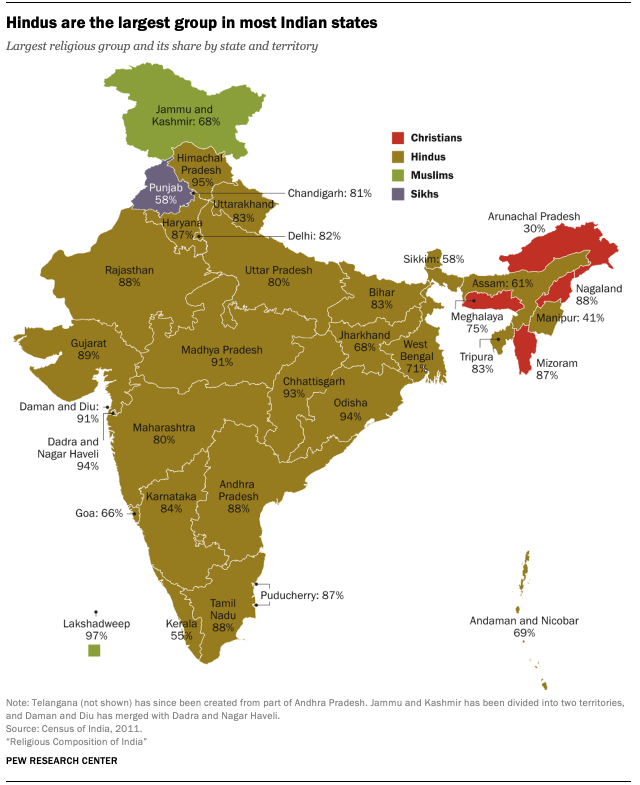
Universal: Girls’ education (UNFPA: 10-20% TFR cut). Incentives: Delayed marriage cash, free healthcare. Religion-wise: Hindus (rural) – ASHA via panchayats (TN success). Muslims (urban) – Mosque awareness, literacy (Kerala model). Christians/Sikhs: Migration support. Convergence via planning (UN). Regional: BIMARU skilling; South incentives if needed. Avoid coercion; focus equality.
Demographic Dividend Deep Dive: Pathways to $10T Economy by 2040
Fewer dependents boost savings 2-3% GDP (East Asia model). Peak 69% working-age by 2036 (UNFPA). EY: $1T by 2030 via tech. Trap avoidance: Skill 400M (Skill India). Roadmap: Universal healthcare, pensions. 37-year window till 2055.
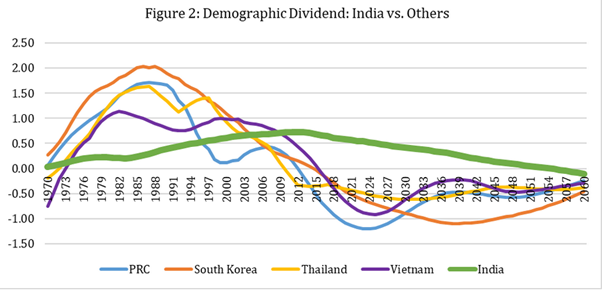
UNFPA India: Reaping the demographic dividend – Working-age population boom graph.
- Meta Title: India Population Explosion 2025: 1.7B by 2060 UN Data – Religion/Region Breakdown, Policy Impacts & Dividend Strategies
- Meta Description: UN WPP 2024: India’s 1.46B surges to 1.7B peak. Hindus 1.17B, Muslims 210M trends; NPP pros/cons, youth manpower boom, faith-smart curbs. Full charts, projections!
- Keywords: India population 2025 UN projections, religion-wise demographics India, demographic dividend strategies, state-wise growth India, population policy analysis
Tags: #IndiaPopulationBoom, #UNWPP2024, #DemographicDividendIndia, #ReligionWiseTrends, #YouthEconomyIndia
Link UN population.un.org; pitch to Pew/Scroll.in. Embed Census visuals for traffic. X #IndiaDemography for virality!
Demography Hub for more. Share the insight!