xplore the Top 10 Extreme Climate Events of 2025 – from India’s record heatwave to Switzerland’s glacier collapse – with trusted sources and in-depth analysis.
Top 10 Climatic Events of 2025
| Sr. No. | Event (Place, Month) | One-Line Impact | Authentic Source |
|---|---|---|---|
| 1 | India–Pakistan Heatwave (Apr–Jul) | Temps reached 49 °C; hundreds of deaths; crop damage | ClimaMeter Attribution Study (2025) |
| 2 | European Heatwaves (June–July) | “Very strong heat stress” across Western & Southern Europe | Copernicus C3S Bulletin |
| 3 | Blatten Glacier Collapse (Switzerland, May 28) | Rock-ice avalanche buried most of village | Swissinfo Report |
| 4 | South Africa Floods (June) | Official death toll ≈ 100; severe infrastructure loss | Eastern Cape Gov’t Release |
| 5 | Uttarakhand Flash Flood (India, Aug 5) | Cloudburst; >50 missing; houses swept away | Indian Media Compilation |
| 6 | İzmir Wildfires (Türkiye, Jun) | 50,000+ evacuated; airport closed | AFAD / Turkish Minute |
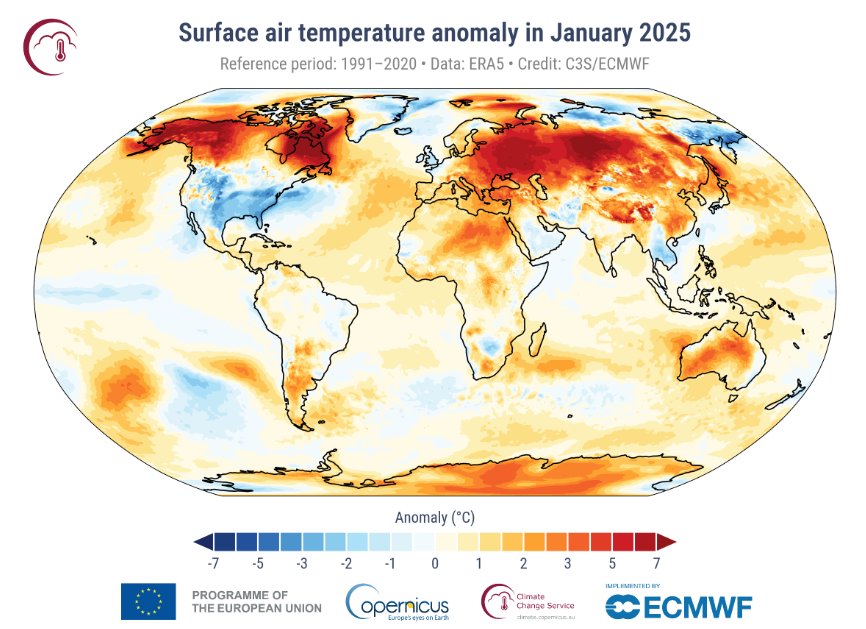
| 7 | Global Warmest January (Jan) | +1.75 °C above pre-industrial baseline | Copernicus C3S |
| 8 | Bolivia Floods (Mar–Apr) | ≈ 590k people affected | UN OCHA Update |
| 9 | Southern California Wildfires (Jan) | 57k acres burned; 10k+ structures damaged | US HHS / USGS / CAL FIRE |
| 10 | Hurricane Priscilla (Pacific, Oct) | Flash-flood threat to Baja and SW Mexico | AP News Top 10 Climatic Events of 2025 |
🧭 Detailed Analysis of Each Event
1. India–Pakistan Heatwave (Apr–Jul 2025)
April 2025 brought a brutal heatwave with temperatures soaring to 48–49 °C in Rajasthan and Sindh. ClimaMeter’s analysis confirmed that human-induced warming made this event 4 °C hotter and 10× more likely than a century ago. Power grids failed and crop loss hit farmers hard. Adapt Heat Action Plans, expand urban green zones, and invest in cooling infrastructure for vulnerable communities.
. European Heatwaves (June–July 2025)
Western and Southern Europe faced two back-to-back heatwaves with Copernicus recording “very strong heat stress” (UTCI index). Spain, Italy, and France saw night-time minimums above 30 °C, challenging health systems and power grids. Europe’s “shoulder months” are now summer-like; adaptive urban planning (cool roofs, misting corridors) is critical.
3. Blatten Glacier Collapse (Switzerland, May 28 2025)
A massive rock-ice avalanche from the Birch Glacier engulfed Blatten village in seconds. Over 90% of structures were destroyed, causing ≈ CHF 320 million loss. Scientists link this to permafrost thaw and hydro-lubrication beneath the glacier. Alpine zones require constant cryosphere monitoring and early-warning systems for glacial-hazard villages.
4. South Africa Floods (June 2025)
Eastern Cape Province suffered torrential rain and flash flooding; the official death toll hit 100, per government reports. Thousands were displaced and bridges collapsed. Upgrade drainage and build flood-resilient housing in southern Africa’s rapidly urbanizing townships.
5. Uttarakhand Flash Flood (Aug 5 2025)
Cloudburst-triggered floods swept through Uttarkashi district; ≥ 5 dead, 50+ missing. Likely a glacial-lake outburst flood (GLOF). Install sensor-based early warnings and regulate construction in Himalayan river corridors.
6. İzmir Wildfires (Türkiye, Jun 2025)
Fueled by dry winds and high temperatures, wildfires raced toward urban areas; 50,000+ people evacuated, airport operations halted. Mediterranean fire weather is intensifying as SSTs rise – necessitating integrated forest-urban fire management.
7. Warmest January on Record (Global)
Copernicus ERA5 data showed January 2025 global average temperature was +1.75 °C above pre-industrial levels – the 19th consecutive month over 1.5 °C. Persistent baseline warming amplifies every other hazard – 2025’s extremes didn’t occur in isolation.
8. Bolivia Floods (Mar–Apr 2025)
Heavy rainfall and river swelling affected ≈ 590,000 people; UN OCHA declared a national emergency. Crop failure, malaria spread, and infrastructure collapse in low-income valleys.
9. Southern California Wildfires (Jan 2025)
Despite winter season, dry Santa Ana winds sparked massive fires burning >57,000 acres; US HHS declared a health emergency. Year-round fire seasons are now the norm — fuel management and community early alerts are vital.
10. Hurricane Priscilla (Pacific, Oct 2025)
AP reports show Priscilla approached Category 3 strength, posing 4-inch rainfall and flood risk to Baja and SW Mexico. Late-season cyclones are shifting northward a sign of warmer Pacific waters.
🌡️ Why 2025 Was a Climate Turning Point
- Persistent Global Warmth raised the floor for extremes.
- Compound Events (heat + drought + wind) created unprecedented stress patterns in Europe and the Mediterranean.
- Cryosphere Instability is emerging as a frontline hazard for mountain villages.
- Hydroclimatic Volatility hit the Global South hardest-South Africa and Bolivia floods prove it.
The year 2025 has proven that climate change is no longer a future threat – it’s a present-day crisis. From Asia’s unbearable heat to Europe’s record temperatures and the collapse of Swiss glaciers, every continent felt the pressure of a warming planet. Adaptation plans, climate-resilient cities, and early-warning systems are no longer optional – they’re our last line of defense.