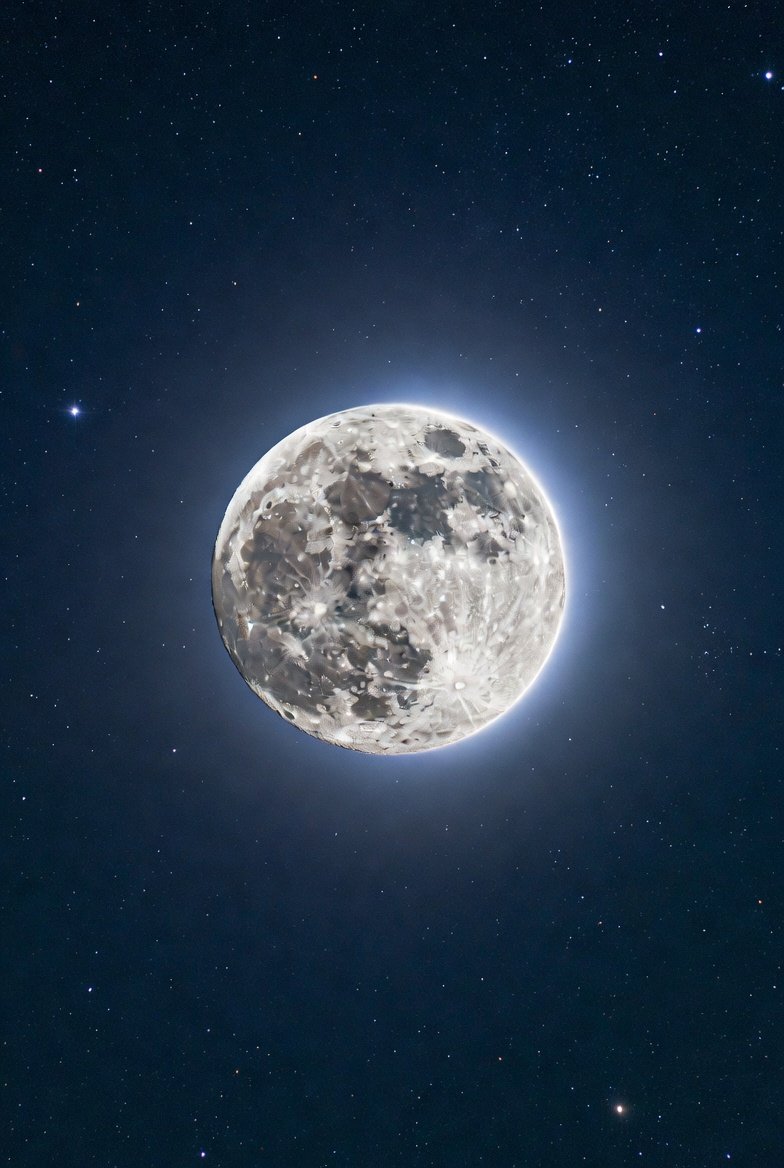
After an incredible run of 10 supermoons in just 14 months (October 2024 to December 2025), the sky is about to go quiet. The gorgeous full Cold Moon rising on 4 December 2025 at 22:14 UTC will be the brightest and one of the biggest moons of the entire decade, reaching 99.9% of its maximum possible size (perigee within 356,400 km). But here is the jaw-dropping part: this will be the very last supermoon visible anywhere on Earth for the next 6+ years. The next official supermoon will not happen until 25 January 2032. Yes, you read that right, no supermoons in 2026, 2027, 2028, 2029, 2030, or 2031.
Why Is This Happening? The Science Behind the 6-Year Supermoon Drought
A supermoon occurs when a full moon coincides with lunar perigee (the moon’s closest point to Earth) within 90% of its closest possible distance. The moon’s orbit is elliptical and precesses slowly (the nodes regress every 18.6 years), which changes how close perigee aligns with full moons. Between 2024 and 2025 we hit a rare “sweet spot” where perigee and full moon lined up perfectly ten times in a row, an unusually high frequency last seen in 2014-2016. After December 2025, the alignment drifts apart dramatically. From 2026 to 2031, every perigee will fall several days away from the exact full-moon moment, pushing the moon’s apparent size below the official supermoon threshold (usually defined as within 361,867 km at full phase). The gap will be widest in 2028-2029, when perigee and full moon will be up to 9-10 days apart.
How Big and Bright Will the December 4, 2025 Supermoon Actually Be?
Perigee distance: 356,954 km (only 550 km farther than the closest possible) Apparent diameter: up to 14% larger than a normal full moon Brightness: up to 30% brighter than a micromoon (farthest full moon) Angular size: 33.5 arcminutes (one of the five largest full moons of the 21st century so far)
Best Places and Times to Watch the Last Supermoon
Best visibility: Eastern North America, Europe, Africa, and Asia on the evening of 4 December 2025. Moonrise will appear gigantic near the horizon thanks to the famous “moon illusion.” Peak illumination occurs at 22:14 UTC, so South America and the Pacific will catch it on the morning of 5 December.
Verdict: Mark Your Calendar in Red
If you love giant glowing moons, clear your schedule for 4 December 2025. This is not just another pretty full moon, it is literally the final supermoon of the 2020s. After this night, the next time the moon will appear this huge and bright at full phase will be January 2032. Six long years without a single supermoon is the longest drought since the modern definition was popularized in 1979. Don’t let this cosmic farewell pass you by, grab your camera, tell your friends, and witness the last supermoon for years!
Shocking truth revealed: The stunning December 2025 Supermoon is the FINAL supermoon until 2032! Discover why this full moon on 4 December will be bigger, brighter, and the last in a historic 14-month streak. Click now before it vanishes from our skies for years!
Last supermoon for years, December 2025 supermoon, why no supermoon until 2032, biggest full moon 2025, supermoon calendar 2026-2032 supermoon explained, closest full moon 2025, lunar perigee 2025, cold moon December, astronomy events 2025
Hashtags: #LastSupermoon #DecemberSupermoon2025 #Supermoon2025 #ColdMoon #Astronomy2025 #SpaceAlert #MoonLovers #DontMissThis
- NASA Lunar Perigee/Apogee Table: https://eclipse.gsfc.nasa.gov/LEcat5/LE2001-2100.html
- TimeandDate Supermoon Calendar: https://www.timeanddate.com/astronomy/moon/super-full-moon
- EarthSky.org: https://earthsky.org/astronomy-essentials/what-is-a-supermoon
- upcoming-astronomy-events-2026 | /how-to-photograph-supermoon | | /why-the-moon-looks-bigger