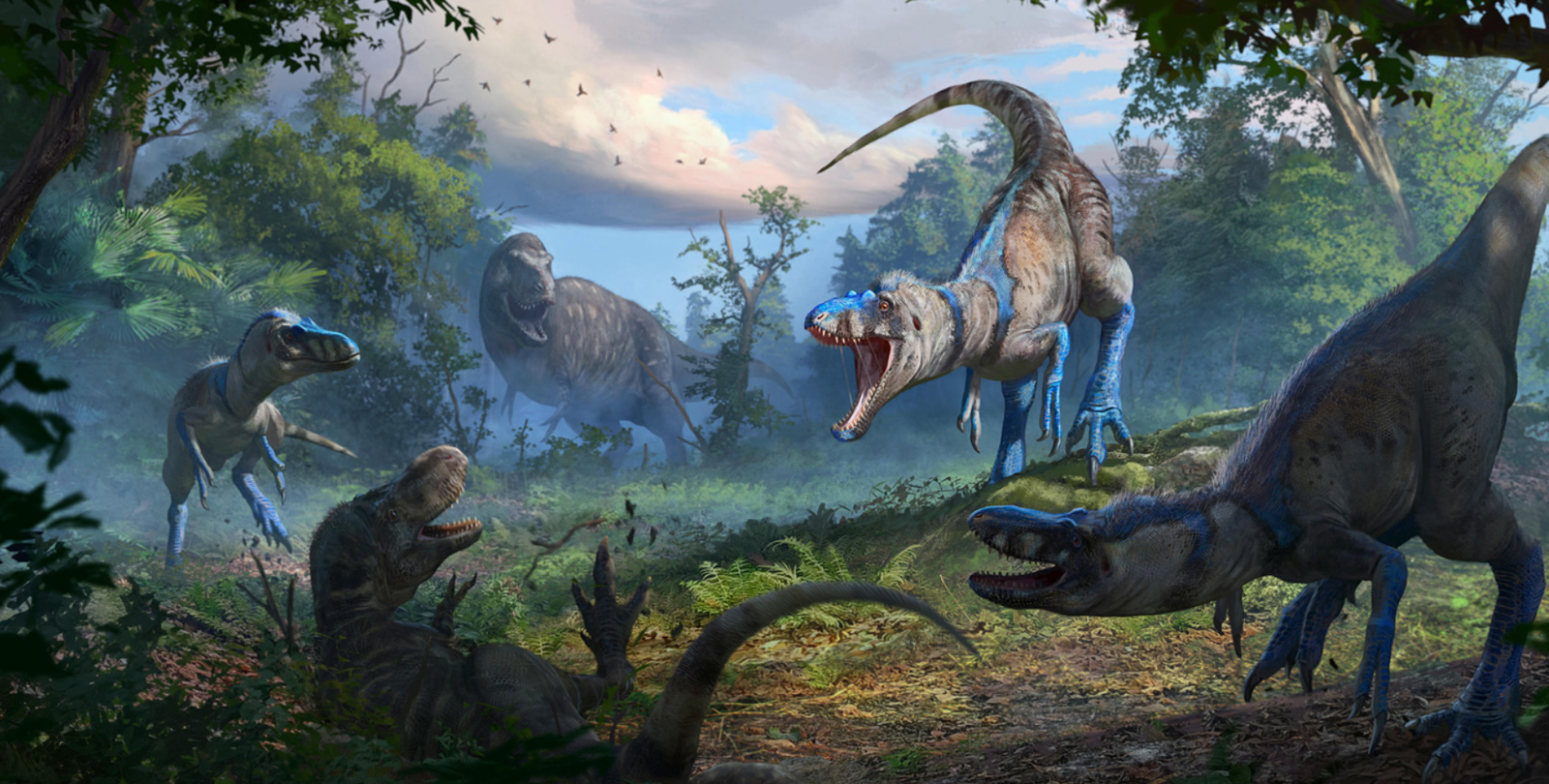
Picture this: two massive predators locked in a deadly duel 67 million years ago, not a family squabble between a teen and its massive parent, but a clash between distinct species in the twilight of the dinosaurs. As of October 31, 2025, a groundbreaking analysis of the famous “Dueling Dinosaurs” fossil has finally settled a paleontological debate raging for over 50 years: Nanotyrannus was not a scrawny adolescent Tyrannosaurus rex, but a sleek, separate species that prowled the Late Cretaceous alongside the king of tyrants. Backed by cutting-edge CT scans and bone histology, this discovery flips decades of research on its head, revealing a more diverse tyrannosaur world. If you’re a dino fan itching for fresh fossils news, buckle up as we unpack the evidence, implications, and why this matters for understanding prehistoric ecosystems. Could this rewrite the T. rex family tree forever? Let’s dig in.
The Long-Standing Debate: Juvenile T. rex or Distinct Dino?
Since the 1960s, when the first Nanotyrannus fossils surfaced in Montana’s Hell Creek Formation, scientists split into camps. Proponents of the “teen T. rex” theory argued the smaller skulls and slender builds of specimens like Jane and Petey were just growing pains of future T. rex giants, based on similarities in tooth structure and jaw shape. This view dominated, influencing studies on T. rex growth rates and behavior, assuming these “nano-tyrants” bulked up dramatically in adulthood. However, skeptics pointed to subtle differences: longer arms, narrower snouts, and higher agility potential, suggesting a separate lineage. The debate simmered until now, with limited fossils fueling endless speculation.
Breakthrough Evidence from the Dueling Dinosaurs
Enter the Dueling Dinosaurs: a stunning 2025 re-examination of this private fossil, acquired by the North Carolina Museum of Natural Sciences, changes everything. High-resolution CT scans reveal mature bone tissue in the tyrannosaur’s arms and legs, complete with external fundamental system (EFS) growth rings indicating full adulthood, not juvenile stages. The skull, locked in combat pose with a Triceratops, sports 58 teeth versus T. rex’s 50-60, plus distinct pneumatic sinuses and a more gracile build optimized for speed over brute force. Lead researcher Lindsay Zanno from NC State University declares, “This isn’t a teenager; it’s a fully grown Nanotyrannus lancensis, standing about 20 feet long and weighing two tons.” No signs of the rapid remodeling seen in young T. rex bones, confirming separation at species level.
Ecological Implications: A Duo of Tyrants in T. rex Territory
This revelation paints a vivid picture of coexistence: T. rex as the hulking apex predator crushing bones with 12,000-pound bite force, while Nanotyrannus played the nimble mid-tier hunter, perhaps ambushing smaller prey or scavenging in packs. Multiple Nanotyrannus species likely filled niches like modern big cats, with the “teacup tyrant” evading direct competition through agility. This diversity explains why Hell Creek teems with tyrannosaur remains, challenging the lone-wolf T. rex narrative. Future hunts may uncover more, potentially doubling known tyrannosaur varieties in North America.
Why This Discovery Rocks Paleontology – And Your Dino Obsession
Beyond fossils, this upends textbooks and inspires new models for dinosaur evolution, hinting at rapid speciation in tyrannosaurs’ final million years. For enthusiasts, it’s a reminder that science evolves with tech like 3D imaging. Museums worldwide, from the Field in Chicago to the Royal Tyrrell in Canada, are rushing to reclassify specimens. What’s next? Could Nanotyrannus feathers or color patterns emerge from melanin analysis? Share your wildest dino theories in the comments – did you buy the teen T. rex tale, or always root for the underdog? For more prehistoric bombshells, subscribe and hit that bell; our latest on feathered raptors drops next week.
This isn’t just history; it’s a call to protect fossil sites amid climate threats eroding Hell Creek. Dive deeper with Zanno’s team publications or virtual tours of the Dueling Dinosaurs exhibit opening in Raleigh this winter.
Shocking 2025 discovery: Nanotyrannus wasn’t a teen T. rex! Uncover CT scan proof of a separate ‘teacup tyrant’ species dueling dinosaurs. Fresh paleo research rewriting history – perfect for dino lovers seeking epic fossil facts.
Nanotyrannus separate species, T. rex juvenile myth debunked, Dueling Dinosaurs fossil 2025, Nanotyrannus lancensis evidence, tyrannosaur coexistence research
teen T. rex debate, paleontology breakthroughs 2025, Hell Creek Formation discoveries, dinosaur evolution models, CT scans in fossils
Hashtags: #NanotyrannusConfirmed #NotTeenTRex #DuelingDinosaurs #TyrannosaurSecrets #DinoDiscovery2025 #PaleoRevolution #TeacupTyrant #FossilFacts #PrehistoricMystery #TrexMyths
- Internal: Link to your site’s “Top Dinosaur Myths Busted” or “Latest Paleo News” pages for user retention.
- External: Anchor to ncsu.edu for Zanno’s study, science.org for ecological insights, and nationalgeographic.com