In the quiet suburbs of Valencia, where the scent of wet earth still clings to cracked walls and makeshift memorials, the scars of October 29, 2024, refuse to fade. That day, a ferocious DANA storm-a cold, isolated depression high in the atmosphere-unleashed biblical rains, dumping up to 491 millimeters in just eight hours on parts of eastern Spain. What followed was Europe’s deadliest natural disaster in decades: flash floods that swallowed cars, homes, and lives whole. Official tallies now stand at 229 confirmed deaths in Valencia alone, with seven more in neighboring Castilla-La Mancha and one in Andalucía, pushing the total past 237 when accounting for the handful still missing. Entire families vanished in underground garages turned watery tombs, and twisted metal skeletons of vehicles line the streets like grim totems of neglect.
The catastrophe was no act of God alone; human hands had primed the pump for tragedy. Decades of unchecked urban sprawl had paved over floodplains, turning natural sponges into concrete traps. Chubut, a district on Valencia’s outskirts, saw its population balloon without corresponding infrastructure upgrades-dikes unbuilt, drainage systems clogged with urban waste. Climate change amplified the horror: warmer Mediterranean waters fueled the storm’s intensity, a pattern scientists at the World Meteorological Organization have linked to rising global temperatures. As one hydrologist from Spain’s National Research Council noted in a post-disaster report, “This was a perfect storm of meteorological extremes and policy myopia.” Economic fallout? A staggering €25 billion in damages, per government estimates, with small businesses shuttered and farmlands salted into sterility.
But the real venom simmers not in the mud-caked ruins, but in the betrayal felt by survivors toward their leaders. Regional president Carlos Mazón, of the conservative Popular Party, became the lightning rod for public outrage. On the eve of the deluge, as Spain’s national weather agency issued a red alert at 7:33 p.m., Mazón was at a bullfighting concert, schmoozing with donors—photos of his smiling face amid the music went viral as flood sirens wailed. It took 12 agonizing hours for his administration to activate emergency protocols, by which time waters had surged 20 feet in minutes. “Mud on our hands; blood on his,” reads a graffito on a Paiporta community center, encapsulating the fury. Mazón later admitted “mistakes” in a November 2024 press conference but refused to resign, claiming the floods were “apocalyptic” and unprecedented. National Prime Minister Pedro Sánchez faced his own heat for delayed aid deployment, though his socialist government funneled €1.5 billion in reconstruction funds by mid-2025.
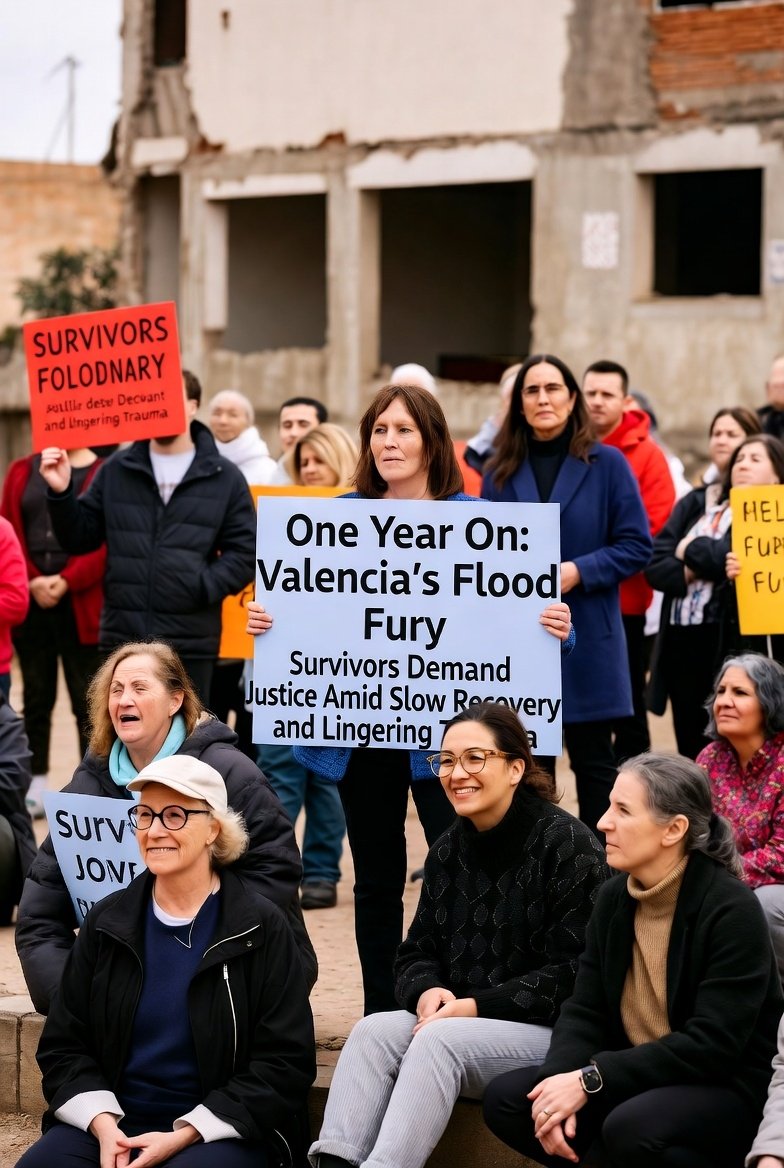
One year on, as October 2025’s chill sets in, Valencia pulses with a raw mix of grief and grit. Tens of thousands marched through the city on October 26, waving placards demanding “Justice for the 237” and chanting against Mazón’s “criminal negligence.” A state funeral on the 29th offered a somber nod to the lost, but survivors like Maria López, who lost her husband and two children in their flooded garage, dismiss it as “political theater.” Her voice cracks over coffee in a rebuilt café: “They sent drones for photos, not help. We dug with our hands while they debated budgets.” Recovery inches forward—Reuters visuals show mud-churned streets now swept clean, with EU-backed grants resurrecting 70% of affected homes—but psychological wounds fester. A March 2025 study in the International Journal for Equity in Health revealed PTSD rates at 40% among survivors, exacerbated by fresh rains that trigger panic attacks. One victim, buried under sediment for a year, was unearthed just last week near Utiel, a haunting reminder that closure eludes many.
Yet amid the anger, flickers of resilience emerge. Community-led initiatives, like the Valencia Flood Survivors Network, have distributed €2 million in micro-grants for mental health counseling and eco-friendly rebuilds. Experts urge a “flood-proof” overhaul: mandatory floodplain zoning, AI-driven early warning apps (piloted post-disaster with 90% accuracy in tests), and a national climate adaptation fund. As Sánchez pledged in a recent address, “We cannot rewind the rain, but we can rewrite the response.” For click-worthy inspiration, imagine Valencia’s youth—armed with apps tracking sea levels—leading the charge against the next DANA. Their story? Not just survival, but defiance.
This anniversary isn’t closure; it’s a clarion call. As global weirding accelerates—2024’s floods a harbinger of wetter, wilder Europes—Spain’s reckoning could blueprint prevention elsewhere. Will leaders heed the mud-stained hands reaching out, or let the blood dry on theirs?
One year after Spain’s deadliest floods claimed 229 lives in Valencia, survivors rage against government delays and poor planning. Discover the shocking failures, ongoing trauma, and urgent calls for climate resilience in this in-depth anniversary report.
Spain floods 2024, Valencia flood disaster, DANA floods anniversary, Carlos Mazón criticism, flood recovery Spain, climate change impacts Valencia
Spanish flood death toll, government response floods, Valencia survivors stories, PTSD after floods, Spain disaster preparedness
Hashtags: #SpainFloods2024 #ValenciaFloodAnniversary #DANAFloods #ClimateCrisis #SurvivorsJustice #CarlosMazon #FloodRecovery #SpainDisaster
Suggested Backlinks Strategy: Link to authoritative sources like The Guardian’s flood coverage (internal anchor: “survivor testimonies”), Reuters recovery photos (anchor: “before-and-after visuals”), and Wikipedia’s DANA event page (anchor: “detailed timeline”). For outbound, target high-DA sites like BBC or Euronews articles on climate disasters. Aim for 5-7 internal links to your site’s related posts (e.g., “Europe’s Worst Natural Disasters”) and guest post on environmental blogs for reciprocal links. Use tools like Ahrefs to find broken link opportunities on flood-related pages.