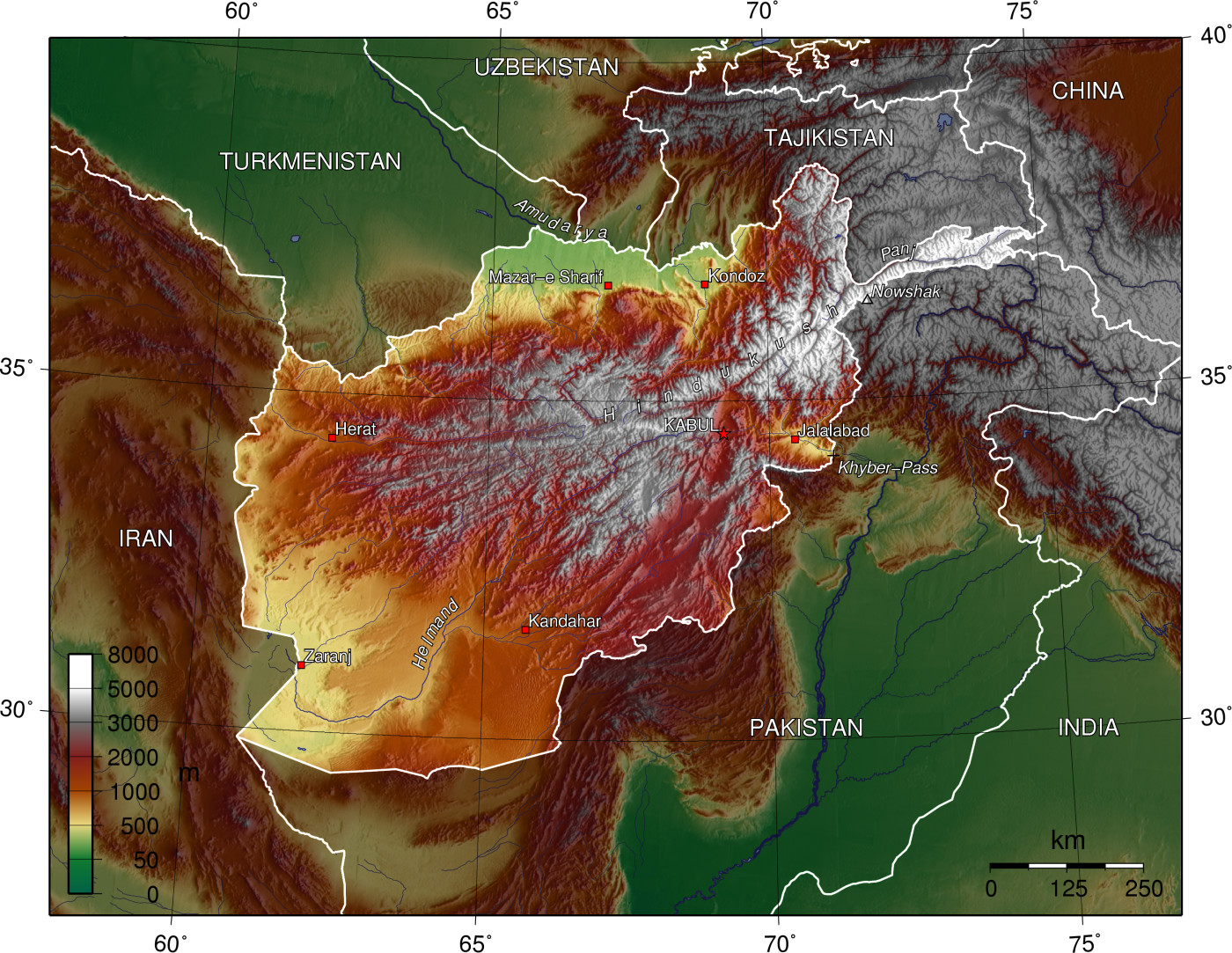
Topographic map showcasing Afghanistan rugged terrain and borders.
Afghanistan a landlocked nation nestled at the crossroads of Central and South Asia boasts a geography that has profoundly shaped its destiny from ancient times to the modern era and holds keys to its potential future. Spanning approximately 652860 square kilometers the country is dominated by towering mountain ranges arid deserts and fertile valleys making it the 40th largest nation globally. The Hindu Kush mountains slicing through the center rise to peaks like Noshaq at 7492 meters the highest point influencing climate patterns and creating diverse ecosystems from snow-capped highlands to dry southwestern plateaus. Rivers such as the Amu Darya Helmand and Kabul sustain limited agriculture in valleys while the country’s borders with six nations Iran Turkmenistan Uzbekistan Tajikistan China and Pakistan position it as a strategic hub historically facilitating trade and invasions. This unique topography not only isolates communities but also fosters resilience among its 41 million people comprising ethnic groups like Pashtuns Tajiks and Uzbeks.
How Geography Shaped Afghanistan’s Rich History

Majestic Hindu Kush mountains that have guarded Afghanistan through centuries.
Afghanistan’s geography has been a double-edged sword throughout history acting as both a fortress and a gateway for empires. As part of the ancient Silk Road its central location facilitated cultural exchanges between East and West with mountain passes like the Khyber enabling trade in silk spices and ideas from as early as the Achaemenid Empire in the 6th century BCE. The rugged terrain provided natural defenses against invaders yet invited conquests from Alexander the Great in 330 BCE to the Mughals and British in the 19th century during the Great Game where imperial powers vied for control over this buffer zone. Valleys like Bamiyan hosted Buddhist monasteries and colossal statues carved in the 6th century symbolizing a blend of Greek Persian and Indian influences before Islamic conquests in the 7th century transformed the cultural landscape. The mountainous isolation preserved tribal structures and ethnic diversity but also fueled internal conflicts as seen in the Anglo-Afghan wars where geography aided Afghan resistance leading to independence in 1919. Soviet invasion in 1979 exploited but ultimately succumbed to the harsh terrain aiding mujahideen guerrillas underscoring how Afghanistan’s geography has repeatedly thwarted foreign dominations.
Afghanistan’s Geography in the Present Day Challenges and Realities

Modern view of Kabul nestled amid mountains reflecting present-day urban growth.
In the present Afghanistan’s geography continues to influence its socio-economic and political landscape under the Islamic Emirate since 2021. The landlocked status limits access to seaports relying on neighbors like Pakistan for trade exacerbating economic isolation amid sanctions and instability. Arid climates and water scarcity from rivers like the Helmand affected by droughts impact agriculture which employs 70 percent of the population leading to food insecurity and reliance on imports. Urban centers like Kabul with over 4 million residents face overcrowding and pollution while remote mountainous areas suffer from poor infrastructure hindering education and healthcare access. Rich mineral deposits including lithium rare earths and copper estimated at 1 trillion USD remain largely untapped due to terrain challenges and conflict though recent economic growth of 2.5 percent in 2024 signals recovery. Climate change intensifies issues with melting glaciers threatening water supplies and increasing natural disasters like floods and earthquakes in this seismically active region.
The Future of Afghanistan’s Geography Opportunities Amid Uncertainties

Iconic Bamiyan Buddhas symbolizing Afghanistan historical cultural heritage.
Looking to the future Afghanistan’s geography offers both challenges and opportunities in a rapidly changing world. Strategic location could revive its role in regional connectivity through initiatives like the China-Pakistan Economic Corridor and TAPI pipeline harnessing natural gas reserves for economic boost. Mineral wealth if sustainably mined could fund infrastructure development alleviating poverty and fostering stability though risks of resource curse and environmental degradation loom. Climate adaptation strategies such as improved water management and renewable energy from solar and wind in vast deserts could mitigate future shocks projected to worsen droughts by 2050. Geopolitical shifts may either isolate the nation further or integrate it into Eurasian trade networks depending on governance and international relations avoiding civil war or fragmentation. Ultimately leveraging its diverse landscapes for tourism agriculture and energy while addressing vulnerabilities will determine Afghanistan’s path toward prosperity and peace.
Meta Description: Discover how Afghanistan’s geography shapes its history, culture, and strategic role in Asia’s future. Explore its mountains, borders, and geopolitics.
Focus Keyword: Afghanistan Geography
Keywords: Afghanistan physical geography, Heart of Asia, Central Asia geopolitics, Hindu Kush mountains, Afghanistan borders, Afghan terrain, geography of Afghanistan, Afghanistan climate, Afghanistan location, Asia’s crossroads, Afghanistan natural resources, Afghanistan future prospects
Keywords: Afghanistan’s strategic position, Silk Road connection, Central and South Asia link, Afghan landscape, Kabul valley geography, Historical trade routes, Mountain passes of Afghanistan
Hashtags: #AfghanistanGeography #HeartOfAsia #Geopolitics #CentralAsia #AsianHistory #AfghanistanMap #HinduKush #SilkRoad #AfghanCulture #AsiaFuture
Backlink Suggestions:
- Geography of Afghanistan – Britannica
- Afghanistan Facts – CIA World Factbook
- Afghanistan News – Al Jazeera
- Afghanistan Development – World Bank
- Afghanistan’s Geography & Culture – National Geographic
Afghanistan’s Geography: Unveiling the Heart of Asia’s Past and Future
Afghanistan’s Geography: 7 Ways It Shapes Asia’s Past and Future.